
When I started blogging again, I described myself as someone who ran “slowly but steadily, at least 100 km a month.”
That sentence was accurate, but it did not feel like a training plan. One hundred kilometers was simply a useful floor: enough to keep running present in a busy month, low enough that work, travel, and family life could still fit around it.
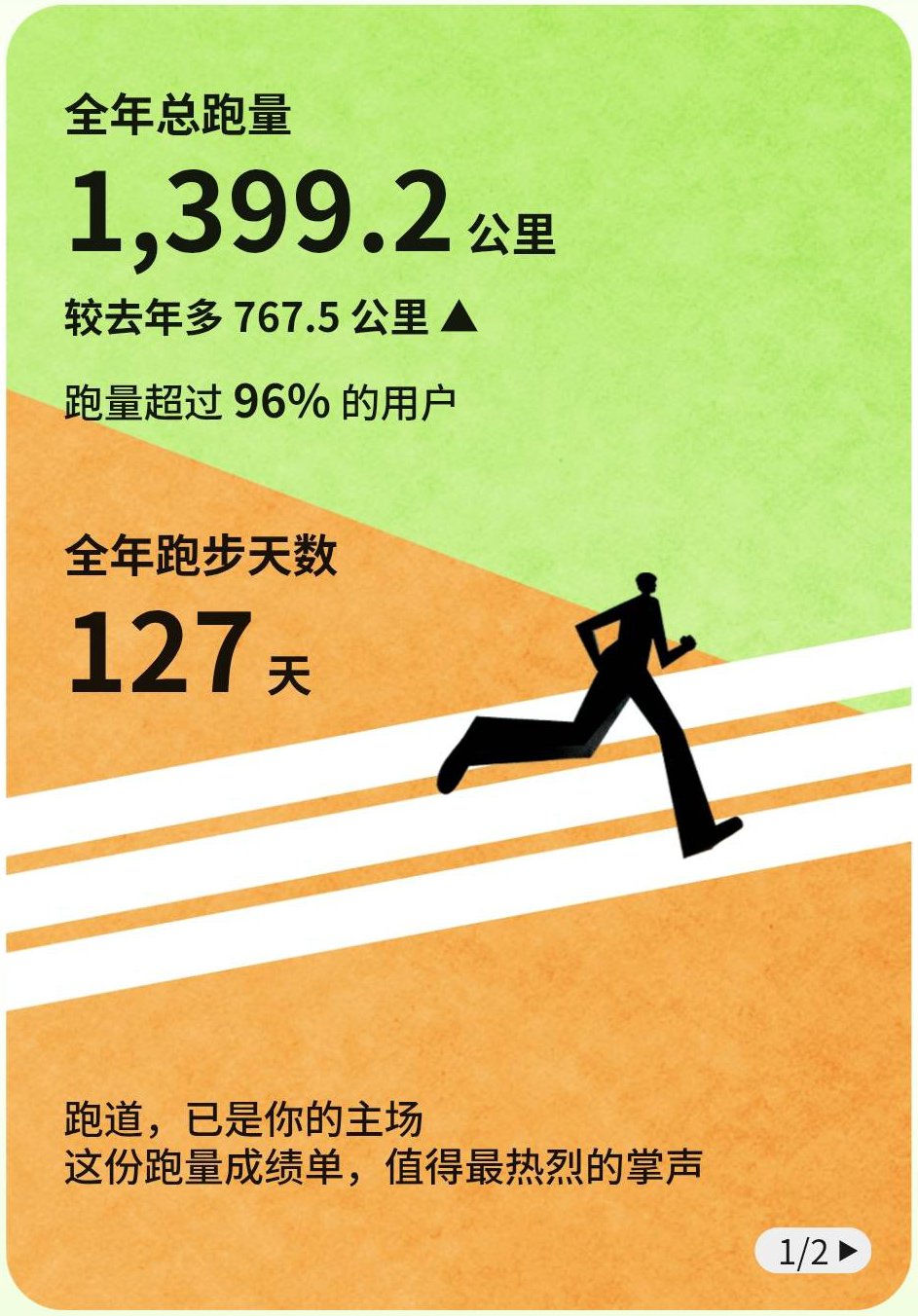
By the end of 2025, the numbers had moved further than I expected:
- 1,399.2 km run during the year;
- 127 running days;
- nine half marathons;
- a best half-marathon time of 1 hour 40 minutes.
There was no dramatic twelve-week transformation behind it. The improvement came from making an ordinary run substantial enough to matter and ordinary enough to repeat.
The Monthly Floor Was More Useful Than a Perfect Plan
A target of 100 km per month averages a little over 23 km per week. It is not an aggressive half-marathon volume, but it changes the question I ask at the end of a busy day.
Instead of:
Do I feel inspired enough to train?
the question becomes:
Where will this week’s kilometers fit?
That shift removes some negotiation. A missed Tuesday does not ruin a plan. The distance can move to Thursday, the treadmill, a riverside path, or a longer weekend loop.
The annual result averaged about 116.6 km per month. Some months were certainly less tidy than that average, but the floor kept the year from dividing into heroic bursts and long disappearances.
My Ordinary Run Became Longer
The biggest structural change was not speed work. It was the size of a normal outing.
Across the year I usually ran two or three times per week, often 10–12 km per session. That is long enough to develop patience and aerobic durability, but short enough to recover from without reorganizing the whole week.
A 10 km run also has a psychological advantage: it feels complete. Whether it happens before work, on an office treadmill, or along the Huangpu, it creates a meaningful block of training in one decision.
That pattern gradually made the half-marathon distance less mysterious. I still respected 21.1 km, but it stopped feeling like a wall.
The City Became the Training Plan
The places varied more than the basic rhythm:
- sunrise around central Shanghai;
- riverfront kilometers in Pudong;
- a red running track on Margaret Island in Budapest;
- the Baltic coast in Palanga;
- Shenzhen Bay before the city woke up;
- office treadmill sessions beside the Middle Ring Road;
- an unreasonable number of stadium laps during Golden Week.
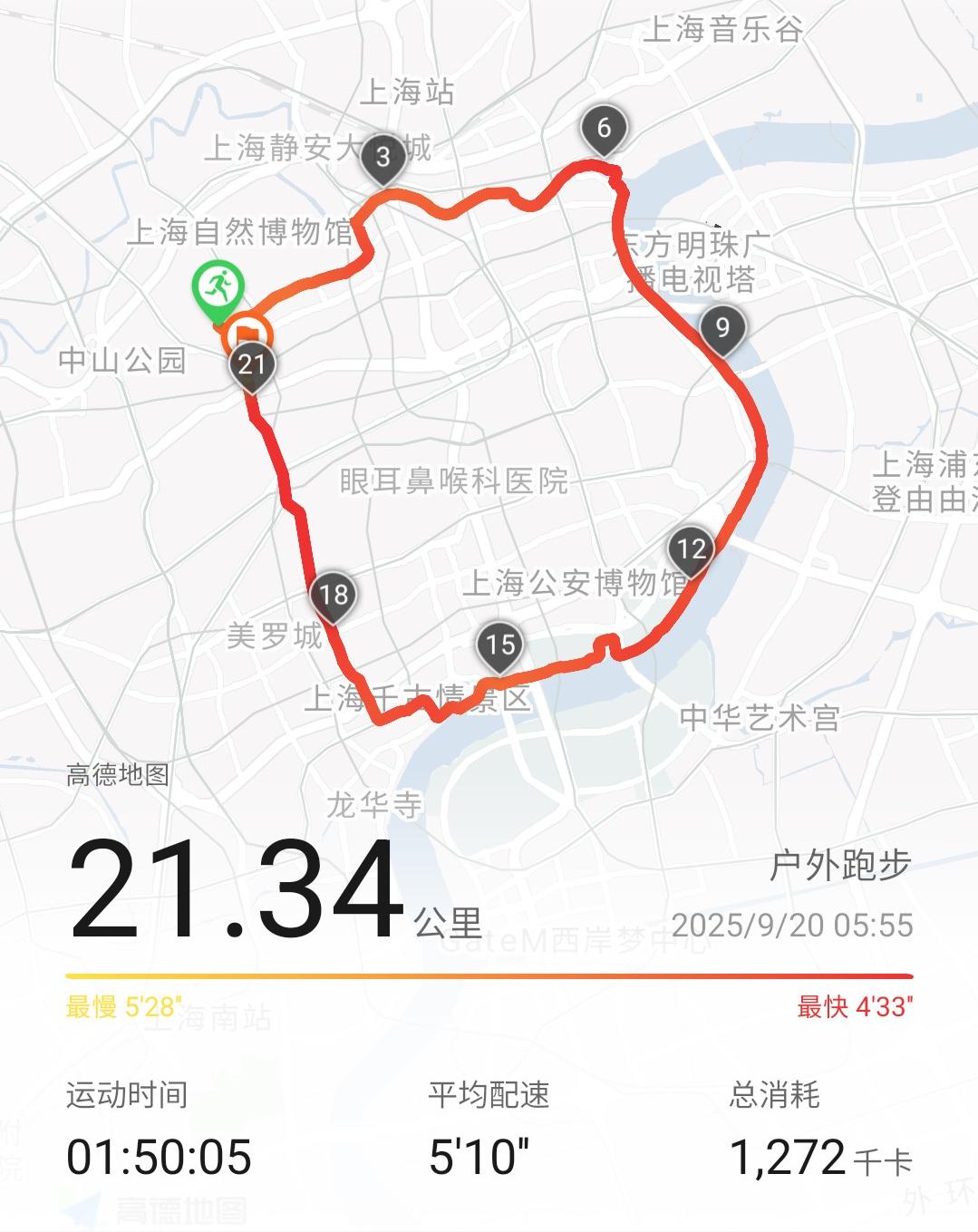
Different routes solved different problems.
The treadmill removed weather and traffic excuses. Stadium laps provided predictable pacing. River paths made long runs interesting enough to continue. Travel runs protected the habit when routine disappeared.
I did not need one perfect training environment. I needed several acceptable ones.
Nine Half Marathons Changed the Distance
Running the half-marathon distance nine times in one year did more than add nine results.
Repetition taught me:
- how conservative the first kilometers should feel;
- which pace is controlled and which pace only looks controlled;
- when thirst becomes a problem;
- how much attention to give a watch;
- what heavy legs feel like before they become a real warning;
- how the final five kilometers expose every early decision.
The most important adaptation may have been emotional. A half marathon became an execution problem rather than an adventure into the unknown.
That calm matters. Starting too fast is often an attempt to purchase confidence with borrowed energy. Familiarity made it easier to let the first kilometers be quiet.
The 1:40 Result Was an Outcome
A 1:40 half marathon requires an average pace of roughly 4:44 per kilometer.
That was faster than most of my ordinary runs. It was not, however, disconnected from them. The slower kilometers built the ability to remain mechanically and mentally stable long enough for the faster day to happen.
My year was not built around racing every run. The pattern was closer to:
- repeat manageable weekly volume;
- make many normal sessions 10 km or longer;
- include the half-marathon distance often enough to understand it;
- let faster efforts emerge without turning every outing into a test.
This is not a universal training prescription. It is what the record says worked for me that year.
What the Numbers Do Not Explain
Running data looks objective, but it leaves out much of the story.
The watch records distance and pace. It does not record:
- the meeting that almost cancelled the run;
- the weather that changed the route;
- whether a treadmill kilometer felt harder than a road kilometer;
- the patience required for dozens of stadium laps;
- family schedules;
- accumulated sleep;
- whether I finished feeling strong or merely finished.
Even the yearly total can mislead. 1,399.2 km sounds like one large achievement. In reality, it was 127 smaller decisions, most of them unremarkable.
That is encouraging because an unremarkable decision is repeatable.
What I Would Keep
If I had to reduce the year to a few principles, I would keep these:
Use a floor, not an all-or-nothing plan. One hundred kilometers gave the month structure without demanding perfection.
Make the ordinary run count. Regular 10–12 km sessions accumulated more value than occasional heroic workouts.
Keep several routes available. Treadmill, track, river, and travel routes preserved continuity.
Repeat the target distance. Familiarity turned 21.1 km from a mystery into a solvable pacing problem.
Do not race every day. The fastest result grew out of many controlled kilometers.
The Next Distance
The next goal is to move beyond 21.1 km without turning the distance into a stunt. That means extending the long run gradually, keeping the early pace quiet, and learning how fueling and recovery change once the familiar half-marathon line is behind me.
Crossing that line will not suddenly make me a different runner. It will be a continuation of the same process: choose a route, settle into a rhythm, and make the next kilometer manageable.
The 1:40 half marathon is a satisfying number. The more durable achievement is that running no longer depends on a special occasion.
One hundred kilometers a month gave me a floor.
Consistency quietly raised the ceiling.