For a long time, I treated stir-frying as the easiest form of Chinese cooking.
Cut everything, heat the wok, add oil, and keep moving.
The result was edible, but not always a stir-fry. Sometimes the pork turned pale instead of browned. Sometimes the chilies released enough water to form a shallow soup. Sometimes the doubanjiang tasted salty and raw. By the time the sauce finally reduced, the meat had become dry and the vegetables tired.
There was no single spectacular kitchen disaster behind this post. It was a repeating pattern of small mistakes.
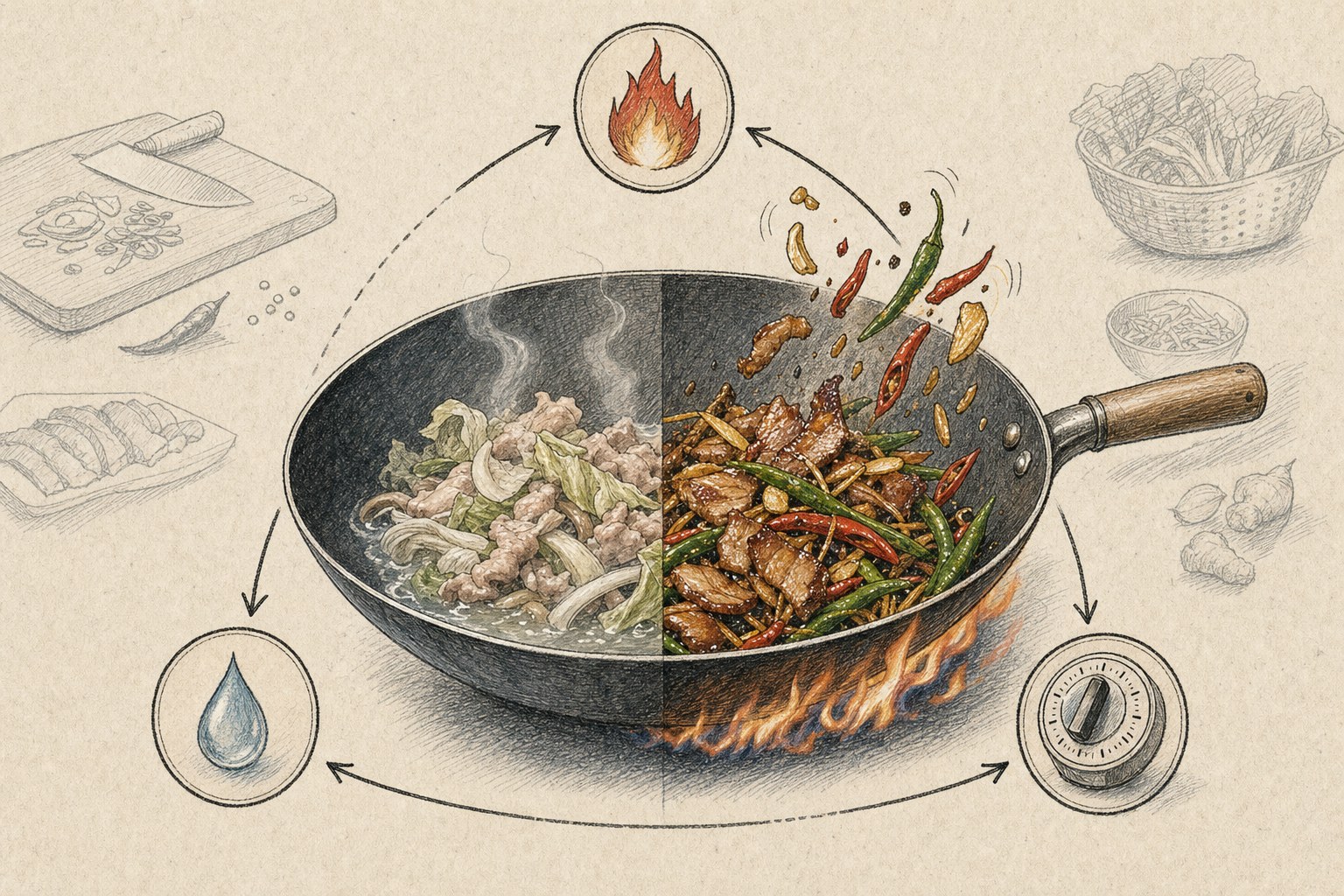
The wok was showing me the same lesson:
A stir-fry is not defined by stirring. It is defined by heat management and sequence.
Failure 1: Too Much Food, Too Little Stored Heat
A home burner can make an empty wok smoking hot. That does not mean it can keep the wok hot after 500 grams of cool, wet ingredients arrive.
Food absorbs energy. Water on its surface must heat and evaporate. If the wok temperature falls too far, browning stops and simmering begins.
My old instinct was to solve this by waiting longer with everything still in the wok. That only extended the time the meat spent cooking.
The better solution is capacity:
- use a well-preheated wok;
- dry the ingredients;
- cook in smaller batches;
- remove one component before adding the next;
- let the wok recover its heat between stages.
For chili pepper pork, I render the fatty pieces first, quickly cook the lean meat, and take the pork out before building the aromatic base.
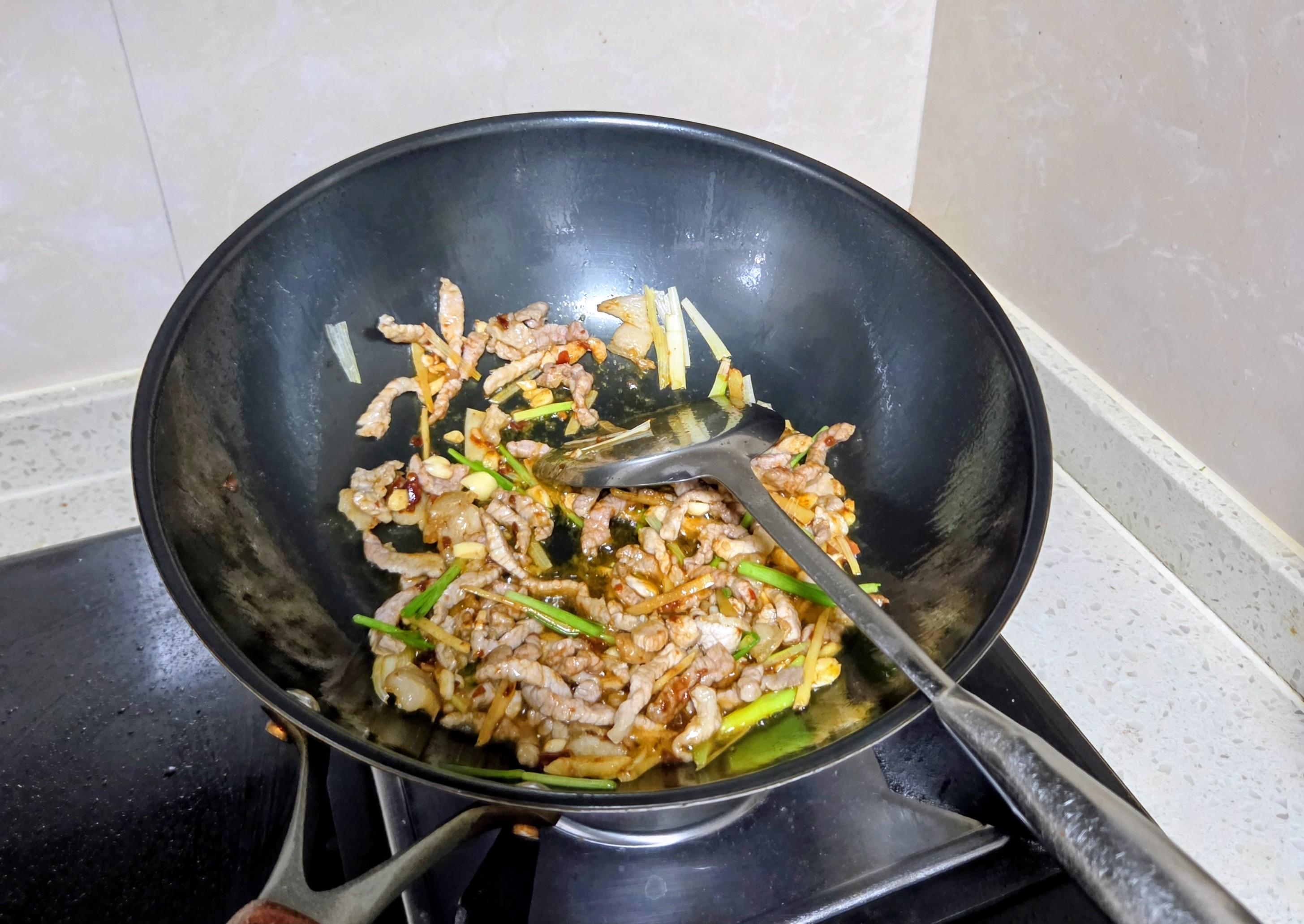
That extra plate on the counter is not inefficiency. It protects texture.
Failure 2: Water Arrived Before Flavor
Fresh vegetables contain more water than they appear to. Washed chilies, mushrooms, leafy greens, and meat marinades all carry moisture into the wok.
When visible water collects at the bottom, three things happen:
- the surface temperature is held near the boiling point of water;
- oil-soluble aromas develop less effectively;
- the dish needs more time, which overcooks its most delicate ingredients.
The obvious correction is to dry vegetables after washing them. The less obvious correction is to control the marinade.
A small amount of water and starch can keep lean pork tender, but “a small amount” matters. The coating should cling to the meat. It should not leave a puddle in the bowl.
Salt also changes timing. Salted vegetables release water, so salting too early can work against the dry, hot environment I am trying to create.
Failure 3: The Meat Was Cut for Appearance, Not Texture
Very thin pork cooks quickly, which sounds ideal. In practice, thin irregular strips can overcook before the wok recovers from the temperature drop.
For this dish, I prefer sturdy, consistent strips:
- separate skin and fat so they can render;
- cut lean meat across the grain where practical;
- keep the pieces similar in thickness;
- use a light starch coating;
- stop the first cook while the meat is still just short of done.
The pork cooks again during the final toss. If it is already perfect before leaving the wok the first time, it is likely to be dry when it reaches the table.
Failure 4: Doubanjiang Was Treated Like Soy Sauce
Pixian doubanjiang is not a finishing condiment. It is a fermented paste that needs contact with hot oil.
Added late or onto a wet pile of ingredients, it contributes salt and raw fermented sharpness. Fried briefly in the rendered fat and oil, it releases a deeper aroma and stains the oil red.
The sequence I now use is:
- remove the nearly cooked meat;
- lower the heat enough to avoid scorching;
- fry doubanjiang until the oil changes color and the raw edge softens;
- add garlic, ginger, scallion, and pickled chili;
- return the meat;
- deglaze and season;
- add fresh chili for the final high-heat toss.
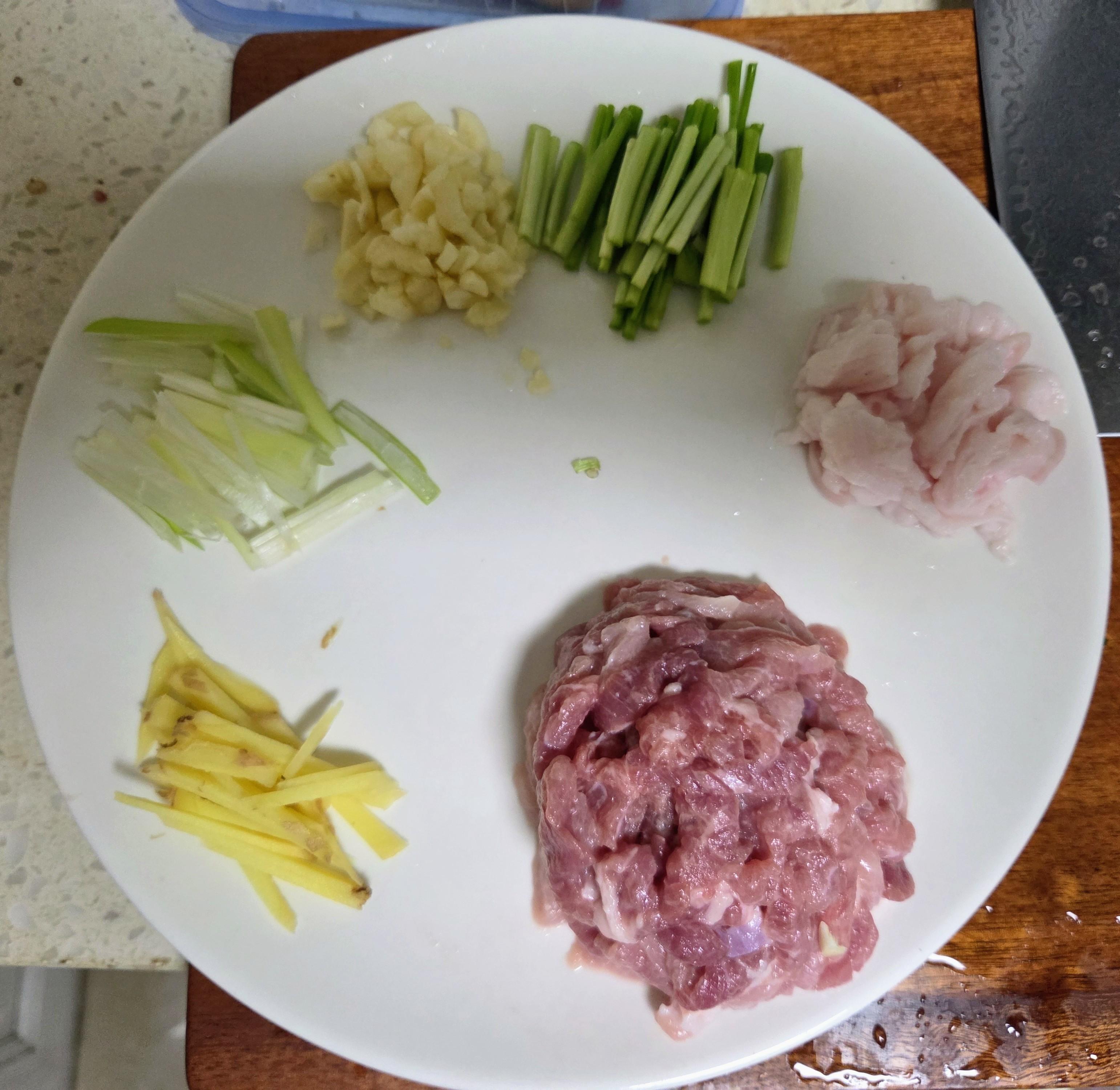
The paste needs time in oil, but not a long time. Burned doubanjiang is bitter and cannot be rescued by more sauce.
Failure 5: Everything Entered in “Recipe Order”
Recipes are often written as a list of steps, but a wok rewards thinking in thermal stages.
Stage 1: render
Fatty pork begins in a hot wok and creates the cooking medium.
Stage 2: sear
Lean pork cooks quickly, then leaves before it dries.
Stage 3: bloom
Doubanjiang and aromatics release flavor into oil.
Stage 4: combine
Meat returns, and soy sauce or cooking wine distributes through the hot mixture.
Stage 5: finish
Fresh chilies cook just enough to lose their raw bite while keeping color and texture. Vinegar, sesame oil, scallion greens, or finishing oil arrive at the end because their aromas are fragile.
Thinking in stages makes it easier to adapt when an ingredient behaves differently from yesterday.
Failure 6: I Optimized the Dish for an Imaginary Diner
Growing up in Sichuan gave me one definition of a satisfying level of heat. My wife and children had another.
At first, reducing the chili felt like weakening the dish. It turned out to be a more interesting design problem: how do I keep fragrance, color, and character while reducing pain?
The answer was not simply “use fewer chilies.”
I could adjust:
- the variety of fresh chili;
- whether the seeds and membranes remained;
- the ratio of fresh to pickled chili;
- the amount of doubanjiang;
- the fragrant aromatics around the heat;
- the rice and other dishes served with it.
The family version became less aggressive, but it was still recognizable. Eventually they began requesting it by name.
That taught me something recipes rarely state: the correct dish is the one for the people actually sitting at the table.
My Current Sequence
For a two-to-three-person serving, the workflow is now:
- prepare and dry every ingredient before heating the wok;
- separate fatty and lean pork;
- lightly season and starch the lean meat;
- preheat the wok and add oil;
- render the fatty pork;
- quickly cook the lean pork and remove it;
- fry doubanjiang, then the aromatics;
- return the pork and add liquid seasoning around the hot wok;
- add fresh chili and toss over high heat;
- adjust salt only after tasting;
- finish with scallion and a small amount of fresh oil;
- serve immediately.

A Better Definition of Wok Hei
I used to think wok hei meant maximum flame.
High heat helps, but a home kitchen cannot imitate a restaurant burner simply through enthusiasm. The practical version is to preserve the wok’s limited energy:
- control batch size;
- remove surface water;
- cut consistently;
- stage the ingredients;
- let the wok recover;
- stop cooking as soon as the final texture arrives.
The failures were useful because each one made a hidden variable visible.
Pale meat was a heat-capacity problem. Watery vegetables were a preparation and timing problem. Raw doubanjiang was a sequencing problem. An unbearably spicy dinner was an audience problem.
The wok was not unpredictable.
I was asking it to solve too many problems at the same time.